

Table of Contents
- What a Good Household Cleaner Actually Needs to Do
- The All-Purpose Household Cleaner: One Bottle, Many Jobs
- DIY Household Cleaner: What Works and What to Skip
- Matching Your Cleaner to the Surface
- Cleaner vs. Disinfectant: What Each One Does
- A Room-by-Room Cleaning Plan
- Conclusion
- Frequently Asked Questions
Last Updated: October 20, 2026
What a Good Household Cleaner Actually Needs to Do
A household cleaner lifts dirt, grease, and everyday grime without damaging what sits underneath.

At Corn Crib Candles, we make our own household cleaner, so we think about this constantly. Most cleaning aisles sell a dozen bottles for a dozen jobs. You probably need two or three, chosen well.
Here is what actually matters when you pick one:
- Soil type. Grease, soap scum, dust, and sticky fingerprints each respond to different ingredients.
- Surface tolerance. Some finishes dull on contact with the wrong formula.
- Rinse behavior. A cleaner that leaves residue attracts new dirt within days.
- Scent load. A heavy fragrance can linger on food prep surfaces.
Below, we walk through how to choose a household cleaner, where each type works, what never to mix, and how to clean a whole house without a cabinet of half-used bottles.
The All-Purpose Household Cleaner: One Bottle, Many Jobs
An all-purpose household cleaner is a water-based formula for routine cleaning on hard, non-porous surfaces. It sits between a heavy degreaser and a gentle specialty product, which is why it earns its shelf space.

This is the bottle we reach for most. A good all-purpose household cleaner handles countertops, appliance exteriors, cabinet doors, sinks, and light floor spots without a second thought.
Where an All-Purpose Cleaner Works Best
Sealed surfaces are its home turf. Think laminate counters, painted trim, stainless steel, glass, tile, and most factory-finished cabinetry. Daily touchpoints like doorknobs, light switches, and refrigerator handles are quick wins.
Storage and Label Basics
Store cleaners out of reach of children and pets, away from heat, and never in a drink bottle or food container. Keep the original label intact so first-aid and ingredient information stays available. If you transfer a concentrate to a spray bottle, label it clearly with the product name and dilution.
DIY Household Cleaner: What Works and What to Skip
A DIY household cleaner is a homemade blend of common ingredients, usually vinegar, baking soda, rubbing alcohol, castile soap, or essential oils, mixed for light cleaning tasks. Some blends earn their place. Others are folklore with a spray nozzle.

Homemade cleaners are good at lifting light soil and saving money on refills. They are not disinfectants, not shelf-stable, and not right for every surface. Knowing which is which is the whole game.
Measured Recipes Worth Trying
Ratios matter. A too-strong vinegar spray etches faster and smells sharper; a too-weak one just smears dirt around.
- Glass and mirror spray: 1 part white vinegar to 1 part water in a spray bottle. Wipe with a lint-free cloth, then buff with a dry one.
- Baking soda paste: 3 parts baking soda to 1 part water for sink scum and stovetop spots. Rinse well and dry, because residue attracts dust.
- Rubbing alcohol wipe-down: 1 part rubbing alcohol to 1 part water on a cloth for greasy fingerprints on hardware and appliance fronts. Do not use on finished wood or painted surfaces.
- Castile soap dilution: a few drops of castile soap in a spray bottle of water for light counter wiping. More is not better; excess soap leaves a film.
- Scented vinegar rinse: add citrus peels to white vinegar for one to two weeks, strain, then dilute 1 to 1 with water for a fresher-smelling spray. The scent softens the vinegar note but does not eliminate it.
Where DIY Falls Short
Vinegar is an acid. It permanently etches marble, travertine, and other calcium-based stone, dulls some grout, and corrodes metal over time, especially aluminum and cast iron.
Baking soda is abrasive. It scratches glossy finishes, acrylic, and some appliance panels. Use it where you want mild scouring, not where you want a shine.
Essential oils add scent, not cleaning power. Some are unsafe around pets, particularly cats. Treat them as fragrance, not an active ingredient.
Homemade mixes spoil. Without preservatives, a water-based blend can grow bacteria within days.
When to Buy Instead of Mix
Some jobs are worth a formulated product: anything needing a disinfecting claim, anything on natural stone or finished wood, and anything where you need a consistent result every time. The same goes for concentrates, which let you refill a bottle again and again without mixing a fresh batch every week.
A practical middle ground: keep one good all-purpose cleaner for daily work and reserve DIY blends for jobs where a simple mix genuinely does the trick, like glass, light scum, and hardware fingerprints.
Matching Your Cleaner to the Surface
Surface compatibility decides whether a cleaner helps or hurts. The right household cleaner preserves the finish; the wrong one quietly ruins it, and the damage often shows up days later, once the surface dries and the light hits it.
Match the cleaner to the finish, not to the room. A kitchen has at least five different finishes, and one bottle will not be right for all of them.
A Practical Compatibility Chart
Surface |
Best Choice |
Avoid |
Why It Matters |
|---|---|---|---|
Sealed countertops (laminate, quartz, sealed granite) |
All-purpose cleaner |
Abrasive powders, scouring pads |
Scratching dulls the seal and traps soil |
Stainless steel |
All-purpose, wiped with the grain |
Chloride-heavy sprays, steel wool |
Chlorides can pit the finish; cross-grain wiping leaves scratches |
Glass and mirrors |
Vinegar and water spray, or a glass-specific formula |
Oily or waxy formulas |
Leaves a film that attracts dust |
Natural stone (marble, travertine, unsealed granite) |
Stone-specific pH-neutral cleaner |
Vinegar, lemon, any acid |
Acid etches calcium-based stone permanently |
Finished wood (cabinets, furniture) |
Damp cloth with mild cleaner, dried immediately |
Soaking wet rags, alcohol-heavy sprays |
Water swells the grain; solvents lift the finish |
Painted trim and doors |
Mild all-purpose, light pressure |
Abrasives, harsh solvents |
Scrubs through the paint film |
Upholstery |
Fabric-appropriate cleaner, spot-tested |
All-purpose spray, bleach |
Can set stains or bleed dye |
Grout |
Soft brush with mild cleaner |
Vinegar on cementitious grout, bleach on colored grout |
Acid erodes grout; bleach fades color |
Oven interior |
Dedicated degreaser |
All-purpose spray |
Not strong enough for baked-on grease |
Appliance exteriors (painted or plastic) |
All-purpose on a cloth, not sprayed directly |
Solvent sprays |
Can cloud or craze plastic |
Why Damage Happens
Most surface damage comes down to three mechanisms. Abrasion removes the top layer, which is why scouring powder on a glossy counter leaves a dull patch that never comes back. Acid reacts with calcium-based materials like marble, travertine, and cement grout, etching a mark no polishing will fully erase.
Knowing which mechanism you risk makes the choice obvious. On stone, guard against acid. On wood, guard against water and solvent. On stainless, guard against chloride and cross-grain scratching.
The Spot-Test Habit
Before any new cleaner touches a visible surface, test it somewhere you will not see: the underside of a counter overhang, the back of a cabinet door, a corner of upholstery under a cushion, or the inside of a stainless appliance panel.
Apply a small amount, let it sit for the label's contact time, then wipe dry and check the area in good light. Look again the next day; some reactions, especially on stone and wood, do not show up until the surface has fully dried.
Cleaner vs. Disinfectant: What Each One Does
A cleaner removes soil. A disinfectant kills germs on a surface. They are different jobs, and one bottle rarely does both well.
Cleaning first is not optional. Dirt and grease shield germs from a disinfectant, so a disinfecting spray on a grimy counter does less than the label promises.
Follow the label's contact time, the minutes the surface must stay wet for the product to work as claimed. Wiping immediately defeats the purpose.
For everyday homes, routine cleaning handles most needs.
A Room-by-Room Cleaning Plan
A room-by-room plan beats wandering the house with one spray bottle and hoping.
Kitchen: Start with cabinet fronts and appliance exteriors, then counters, then the sink, then floors. Degrease the stovetop separately.
Bathroom: Spray shower walls and let them sit while you clean the sink and toilet.
Living room: Dust high surfaces first, then furniture, then glass, then vacuum or sweep.
Bedrooms: Change linens, dust nightstands and lamps, wipe switches, and finish with floors.
Keep a caddy with your all-purpose household cleaner, a microfiber cloth, a scrub sponge, and a glass spray.
Conclusion
Choosing a household cleaner gets easier once you stop buying for every job and start buying for your surfaces. Two or three well-chosen products, used with care about mixing and dwell time, will carry you through the whole house.
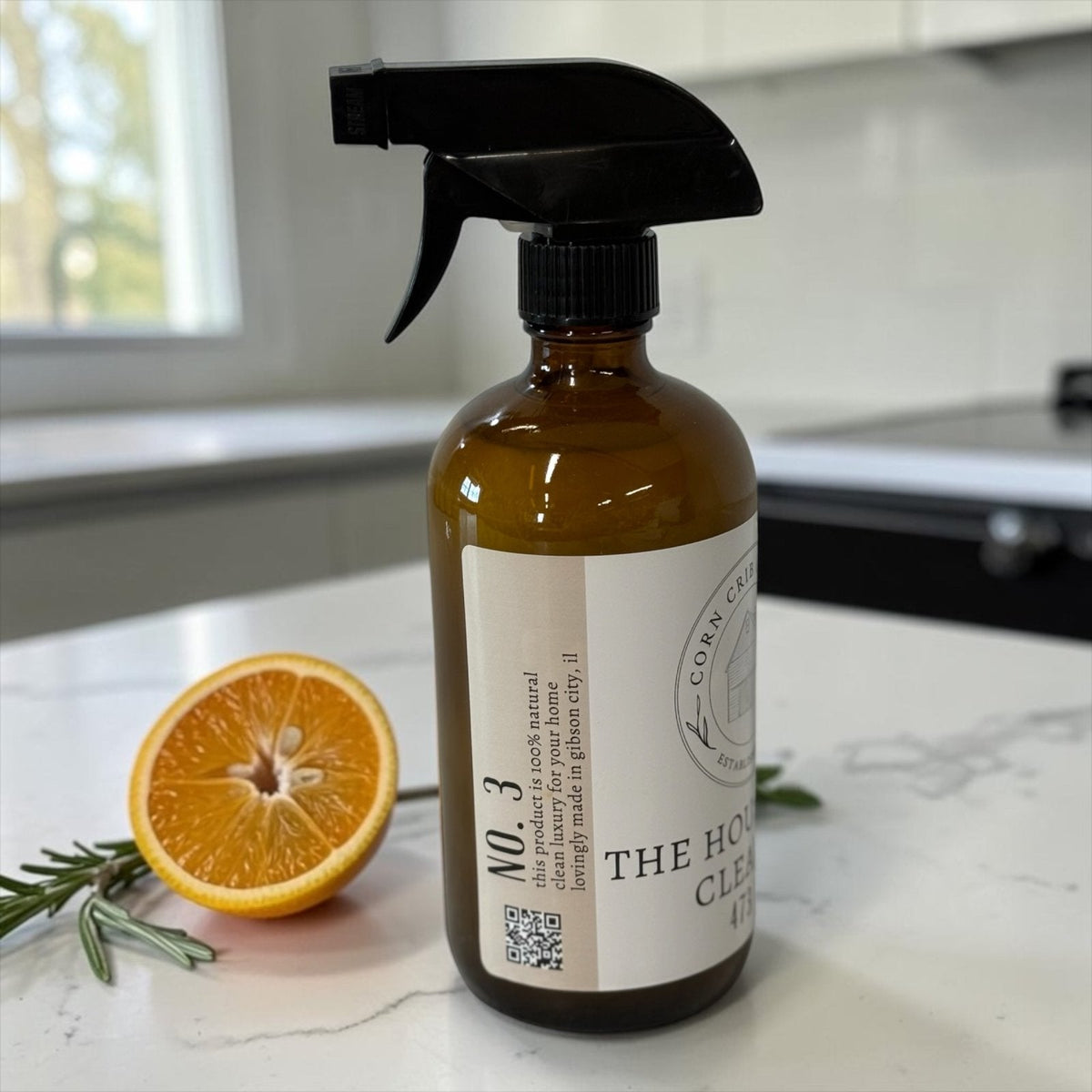
We make our household cleaners in small batches with essential oils, and we would love to help you find the scent that makes cleaning feel less like a chore. Our Household Cleaner No. 1 brings lemon, citronella, and eucalyptus to the everyday routine, while Household Cleaner No. 2 blends citrus with rosemary, eucalyptus, and clove. For a bright citrus lift, try Household Cleaner No. 3, or stock up with our concentrated multi-purpose household cleaner that refills your bottle again and again.
Start with one bottle that fits your home, and see how much simpler the routine becomes.
Frequently Asked Questions
Can one household cleaner be used on every surface?
No single cleaner suits every surface, even a versatile all-purpose one. Glass and stainless steel usually want a streak-free finish, while sealed stone, unfinished wood, and some electronics need gentler or specialty care. Always check the surface manufacturer's care instructions and test a small hidden spot first. A concentrated household cleaner can cover most kitchen and bathroom jobs when you dilute it per the label, but keep separate products for delicate finishes and anything the label warns against.
What should you look for in an all-purpose household cleaner?
Read the label for the surfaces it lists, dilution directions, and any warnings. A concentrated formula often stretches further and costs less per use, while a ready-to-use spray is simpler for quick jobs. Look for clear ingredient and scent information, especially if anyone in your home is sensitive to fragrance. Corn Crib Candles offers an all-purpose household cleaner in three scent profiles, plus a concentrate that the listing says makes up to three to four refills.
Can you make an effective DIY household cleaner at home?
Some simple mixtures handle light everyday messes. Vinegar and water works on glass and many hard surfaces, and baking soda paste lifts mild residue. But DIY cleaners have real limits: vinegar can damage stone and some finishes, and homemade mixes are not disinfectants. Never combine vinegar with bleach or ammonia, and skip DIY on anything the surface maker warns against. For heavier grease or consistent results, a formulated household cleaner is the safer bet.
What is the difference between a cleaner and a disinfectant?
A cleaner removes dirt, grease, and grime, while a disinfectant is meant to kill germs on a surface, and it only works on a surface that is already clean. Most everyday cleaning only needs a cleaner. If you do disinfect, follow the product label for contact time and use, and never assume a general-purpose spray sanitizes just because it smells fresh. Keep the two jobs separate in your routine.

Leave a comment
This site is protected by hCaptcha and the hCaptcha Privacy Policy and Terms of Service apply.