Table of Contents
- Why the Best Clean Candles for Home Start With the Wax
- What Is a Clean-Burning Candle, Really?
- Soy vs Paraffin Wax Candles: The Difference You Can See
- 7 Clean Candles for Home, Ranked by the Moments They Suit
- How to Reduce Candle Soot in Your Home
- Candle Burning Safety Tips Every Home Should Know
- Choosing Your Next Clean Candle
- Frequently Asked Questions
Last Updated: October 19, 2026
Why the Best Clean Candles for Home Start With the Wax
Walk into any home goods aisle and you'll see the word "clean" on nearly every label, though few explain what it means.
The best clean candles for home begin with a plant-based wax and a cotton wick, because those choices shape everything that follows, from how the candle burns to how the room feels afterward.
Below, we'll walk through what "clean-burning" really means, how wax types differ, and seven candles matched to the moments you'll actually light them for.
What Is a Clean-Burning Candle, Really?
A clean-burning candle is made with a plant-based wax and a lead-free cotton wick, poured without dyes, and scented with a thoughtfully chosen fragrance. In practice, "clean-burning" describes materials and how they behave as the candle burns, not a certification or a guarantee.
That distinction matters, because the word "clean" has no single legal definition on a candle label. It functions more like a marketing signal than a standard. The U.S.
What we actually know about candle emissions
Any candle with a flame produces some combustion byproducts, including small amounts of soot and trace volatile organic compounds, whether it's soy, beeswax, coconut, or paraffin. What matters is how much is produced and how well the room is ventilated, not whether a candle is "chemical-free" (no burning candle is).
A few well-established points are worth keeping in mind:
- Lead wicks are banned. The CPSC prohibited lead-cored wicks in 2003, so a modern cotton or wood wick should not contain lead. Vintage or imported candles are the one case worth checking.
- Soot is a combustion issue, not a wax issue. A long, untrimmed wick, a drafty room, or an oversized flame produces more soot than wax type alone. A well-tended candle of any wax burns far cleaner than a neglected one.
- Ventilation does most of the work. A cracked window, a running exhaust fan, or a larger, airier space keeps exposure low.
How to read a candle label like an editor
You don't need a chemistry degree to judge a candle, just a sense of which lines matter.
- Find the wax line. It should name a specific wax (soy, coconut, beeswax) rather than "wax blend" or "proprietary blend." A blend isn't automatically bad, but a brand that won't say what's in it is telling you something.
- Check the wick. Cotton, paper, or wood are the standard lead-free options. "Lead-free cotton" is a good sign; a vague "natural wick" is worth a question.
- Look for dyes. Dyes are cosmetic and add nothing to performance. A dye-free candle is one fewer variable.
- Read the fragrance description. A brand that names its fragrance notes and can speak to how the scent is formulated is more transparent than one that lists only a mood word.
- Check the burn instructions. Clear guidance on wick trimming and first-burn time signals a maker who understands their product.
Soy vs Paraffin Wax Candles: The Difference You Can See
Soy wax and paraffin wax behave differently in the jar, and you can often spot the difference before you light a wick. Soy is plant-based and burns cooler and slower; paraffin is a petroleum byproduct that burns hotter and faster.
That heat difference shows up in ways you'll notice:
- Burn pace: Soy candles generally last longer ounce for ounce because they burn cooler.
- Soot: A cooler, well-trimmed soy candle tends to produce less soot than a hot-burning paraffin one.
- Scent throw: Paraffin can push fragrance hard and fast; soy releases it more gradually.
Many mass-market candles blend both waxes to cut costs, which is why the label sometimes just says "wax blend." If clean materials matter to you, ask what's in that blend.
A simple scoring sheet for any candle
Rather than trusting a label, score each candle against the same five criteria. It takes two minutes and makes comparisons honest.
|
Criterion |
What to look for |
Why it matters |
|---|---|---|
|
Wax disclosure |
A named wax, not "blend" |
Tells you what you're burning |
|
Wick material |
Cotton, paper, or wood, lead-free |
Affects soot and flame behavior |
|
Fragrance disclosure |
Named notes and formulation info |
Signals transparency |
|
Burn performance |
Even melt pool, no tunneling, low soot when tended |
Shows real-world quality |
|
Value per burn hour |
Price divided by estimated burn time |
Compares cost fairly |
Score each row from one to five for a rough total out of twenty-five. A candle that scores well on wax and wick but poorly on disclosure is still one you can feel good about, as long as you know what you're getting.
The value question most roundups skip
Purchase price alone doesn't tell you whether a candle is a good deal. What matters is cost per burn hour, which depends on wax type, jar size, and how well the candle is tended.
Here's the math, using round numbers:
- Cost per ounce: Divide the price by the net weight in ounces. A larger jar almost always wins here.
- Estimated burn hours: A common rule of thumb is roughly seven to nine hours per ounce of wax for a well-tended candle. A 16 oz. candle might reasonably deliver somewhere in the neighborhood of 110 to 145 hours.
- Cost per burn hour: Divide the price by your estimated burn hours. This lets you compare a small boutique candle against a big-box one fairly.
A candle that costs more up front but burns twice as long can easily be the better value. The catch is that burn time depends on care: a tunneling candle wastes wax, and an untrimmed wick burns hot and fast.
Where blends and packaging fit in
Wax is only part of the story. A few other trade-offs matter:
- Blends aren't automatically worse. Some makers blend soy with a small amount of paraffin to improve scent throw and burn stability. The question is disclosure, not the blend itself.
- Refillability and packaging. A refillable vessel or recyclable glass reduces waste over time. A beautiful jar you'll reuse is worth more than a cheap one you'll toss.
- Sourcing. Plant-based waxes are grown somewhere, and how a brand talks about sourcing tells you how seriously they take the whole picture. "Natural" is not the same as "sustainable," so treat those as separate questions.
7 Clean Candles for Home, Ranked by the Moments They Suit
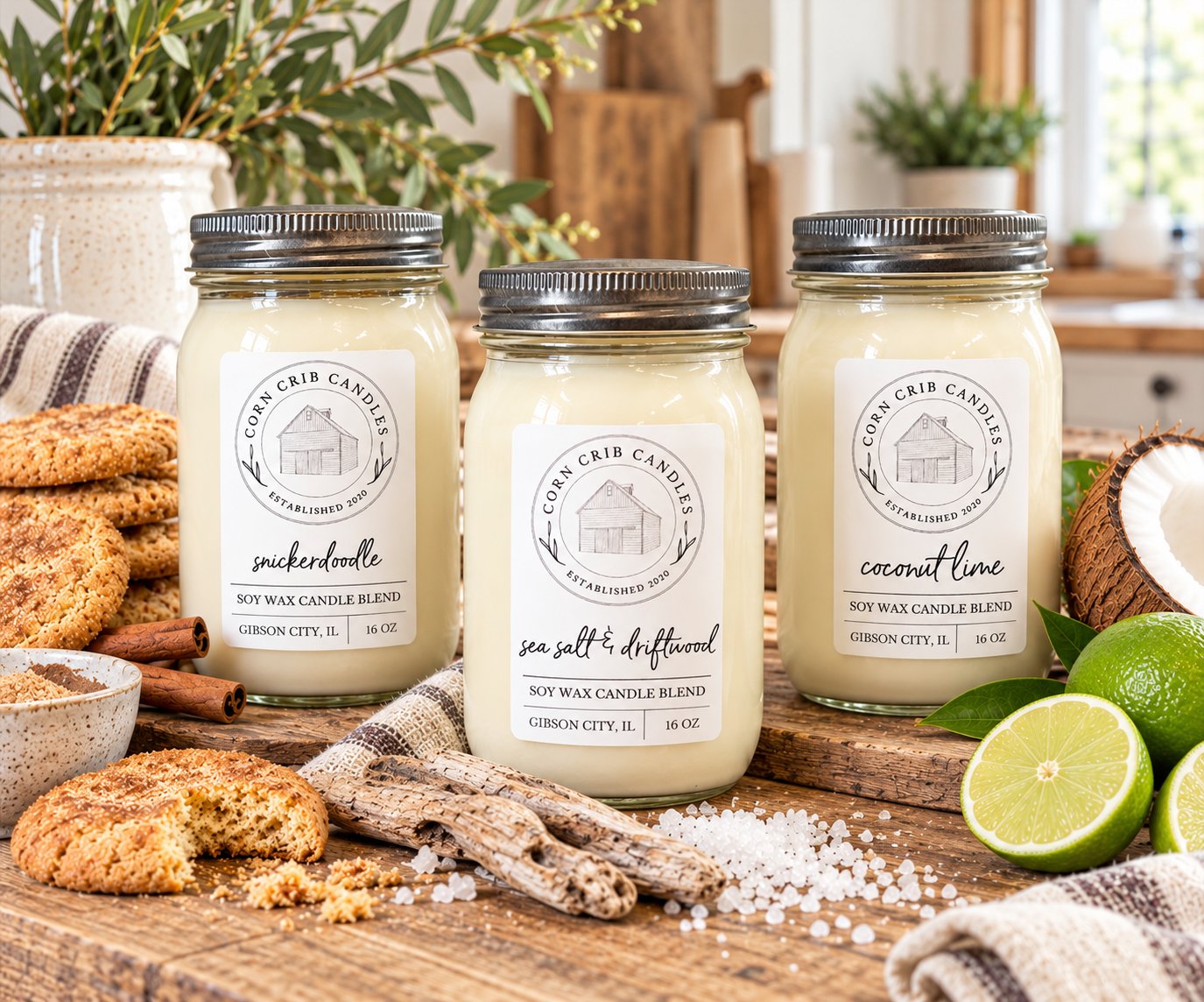
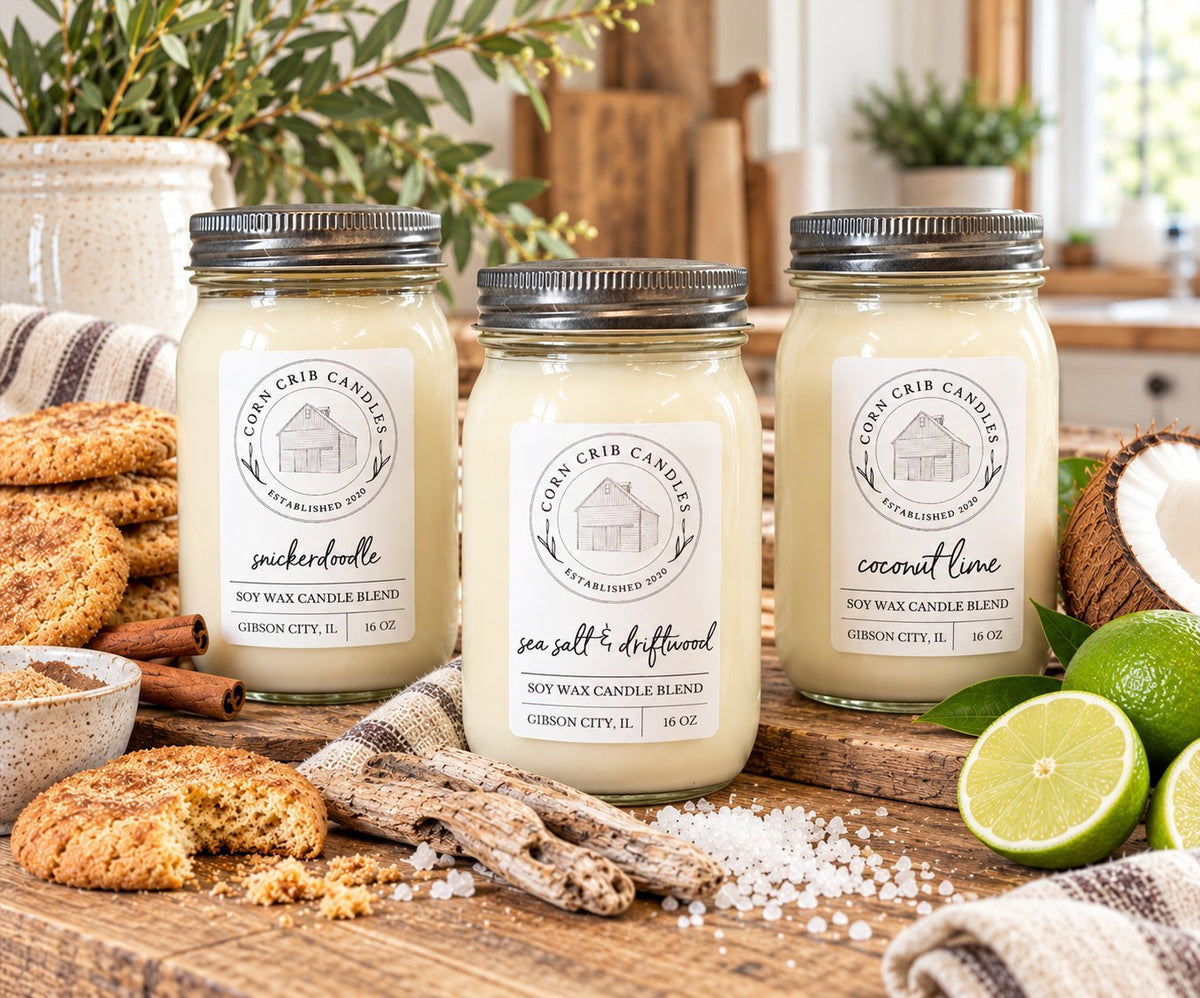
Here's how we'd match our own hand-poured soy candles to the rhythms of a home. Each is poured in small batches with a cotton wick and suits a different kind of moment.
|
Candle |
Best Moment |
Fragrance Family |
Format |
|---|---|---|---|
|
Open-window mornings |
Floral and green |
16 oz. candle |
|
|
Relaxation |
End of a long day |
Citrus, herbal, spa |
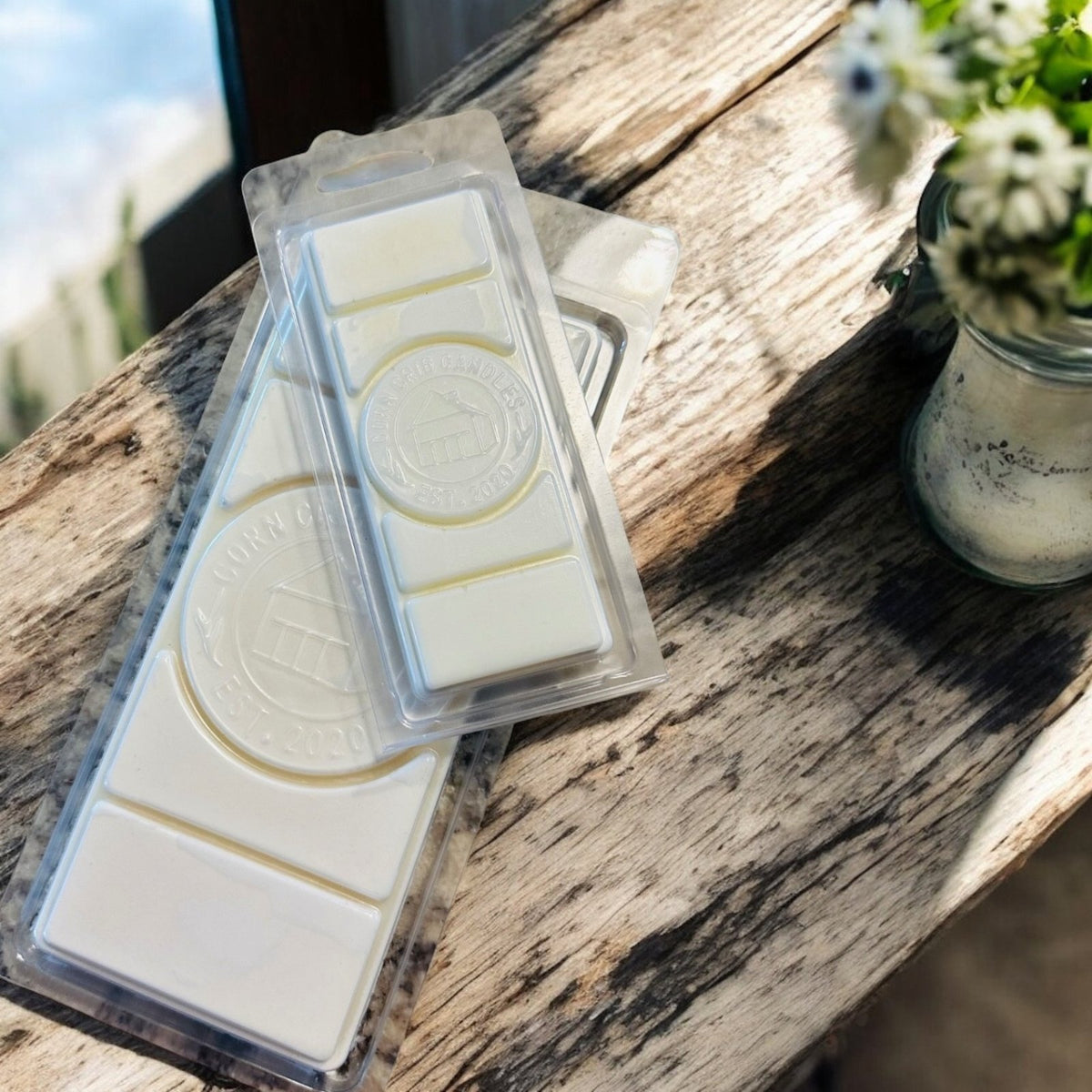
Candle or wax melts |
|
Lavender |
Bedtime ritual |
Floral with herbal edge |
Candle or wax melts |
|
Farm Fresh Lemon |
Bright kitchen moments |
Citrus bakery |
Candle or wax melts |
|
Home Sweet Home |
Gatherings and company |
Warm bakery spice |
Candle or wax melts |
|
Marmalade |
Small rooms, sunny afternoons |
Bright citrus |
Candle or wax melts |
|
Amber Moon |
Quiet evenings in |
Amber, woods, vanilla |
16 oz. candle |
Midwest Meadows: For Open-Window Mornings
Some mornings call for nothing more than a cracked window and a light scent drifting through the room. Midwest Meadows pairs soft florals with crisp green notes and a gentle touch of earth. It's airy rather than heavy, a natural fit for a spring or summer morning when you want the house to feel fresh instead of perfumed.

Relaxation: For the End of a Long Day
If your evenings involve a book and a quiet corner, Relaxation is built for that pause. Mandarin and bergamot open the blend, with thyme, ginger, jasmine, and white tea rounding it into something spa-like. It comes as a 16 oz. candle or in 2 oz. and 6 oz. wax melts.

Lavender: For a Calm, Familiar Bedtime Ritual
Lavender brings a classic floral fragrance to your home, accented by notes of citrus, camphor, and eucalyptus. This familiar scent pairs the character of lavender with fresh, aromatic touches for a blend that feels both timeless and inviting. Light it while you tidy the bedroom or fold laundry.
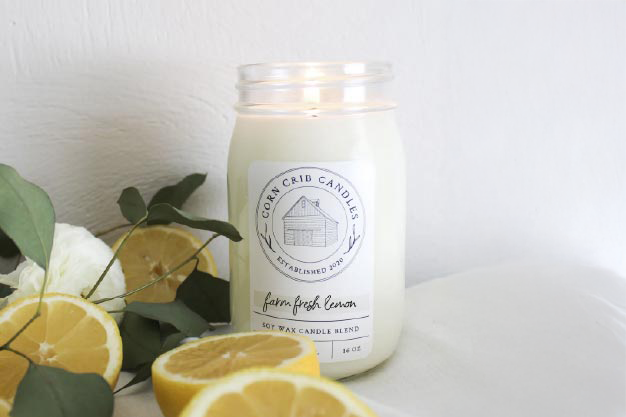
Farm Fresh Lemon: For Bright Kitchen Moments
A lemon cake fragrance in the kitchen is a small luxury. Farm Fresh Lemon blends lemon peel and juicy lemon with butter, sugar, and vanilla for a bakery-style finish. It's the candle we reach for on a gray afternoon when the house needs a little sunshine.

Home Sweet Home: For Gatherings and Company
Vanilla, butter, cinnamon, and sugar: four familiar notes that smell like someone's been baking. Home Sweet Home is our pick for setting out snacks before guests arrive or for the slow hours of a holiday afternoon.
Marmalade: For Small Rooms and Sunny Afternoons
In a small room, a strong scent can overwhelm. Marmalade leans bright and juicy, with orange, lemon peel, grapefruit, mandarin, tangerine, and a hint of lime softened by agave and peach. It's cheerful without being heavy, which suits a bathroom, entryway, or sunny kitchen corner.
Amber Moon: For Quiet Evenings In
When the day winds down, warm and understated beats bright. Amber Moon brings together amber, gentle woods, golden musk, and soft vanilla. It's the candle for a reading chair, a low lamp, and nowhere to be.
How to Reduce Candle Soot in Your Home
Soot comes from incomplete combustion, and most of it is preventable.
Start with the wick. Trim it to about a quarter inch before every burn and remove any mushroomed tip; a long wick creates a bigger flame that burns faster and throws off more soot.
Finally, don't burn for more than about four hours at a stretch. Past that point, the wax gets hot, the wick grows, and soot builds up.
Candle Burning Safety Tips Every Home Should Know
Candle safety comes down to attention and placement. Most candle incidents involve a flame left unattended or a candle set too close to something that can catch fire. The National Fire Protection Association consistently ranks candles among the leading causes of home fire deaths, and nearly all of those fires are preventable.
Keep these habits close:
- Never leave a burning candle alone. Blow it out before you leave the room or drift off.
- Clear the space. Keep candles at least a foot away from curtains, paper, bedding, and shelves.
- Use a stable, heat-safe holder. A jar on a wobbling tray is an accident waiting to happen.
Choosing Your Next Clean Candle
The best clean candles for home aren't the ones with the loudest label. They're made from materials you can name, poured with care, and matched to the way you actually live.
That's the approach we take at Corn Crib Candles.
If you're ready to find your next favorite, explore our seasonal fragrance collection and see which one fits your home.
Frequently Asked Questions
Is it healthy to burn soy candles?
Soy wax burns at a lower temperature than paraffin and is plant-based, which is why many people choose it for everyday home fragrance. That said, no candle is completely emission-free: any flame produces some soot and smoke. The practical steps that matter most are trimming the wick to about 1/4 inch before each burn, keeping the candle away from drafts, and not burning for more than four hours at a time. Choosing a soy candle with a cotton wick and a thoughtfully selected fragrance is a reasonable starting point for a cleaner-burning routine.
What does "clean-burning candle" actually mean?
There is no official certification behind the phrase, so it is best read as a description rather than a guarantee. In practice, people use it for candles made with plant-based waxes like soy, coconut, or beeswax, cotton or wood wicks instead of metal-core wicks, and fragrance that is disclosed rather than vague. A clean-burning candle still produces a flame, so soot and smoke are part of the picture. What you can control is the wax type, the wick, how well you trim it, and how long you burn.
Are soy candles better than paraffin candles?
Soy and paraffin behave differently, and the right choice depends on what you value. Soy wax is plant-based, burns at a lower temperature, and tends to burn more slowly, which is why a soy candle often lasts longer ounce for ounce. Paraffin is petroleum-derived and throws scent strongly. Neither is risk-free when burned. If you want a slower, cooler burn and prefer a plant-based wax, soy is the practical pick. If scent throw is your only concern, paraffin delivers it, though at the cost of a faster burn.
How can I reduce soot when burning a candle?
Trim the wick to about 1/4 inch before every burn, and remove any mushroomed black tip first. Keep the candle out of drafts from windows, vents, and ceiling fans, since moving air is the biggest cause of uneven burning and soot. Burn long enough for the wax to melt across the full surface, usually two to three hours for a 16 oz. candle, but never longer than four hours at a stretch. If you see black smoke curling off the wick, blow it out, let it cool, and trim again before relighting.
Do cotton-wick candles burn cleaner than other wicks?
Cotton wicks are a straightforward choice because they are made from a single familiar material and do not have a metal core. A properly trimmed cotton wick burns steadily and keeps the flame at a reasonable size, which is what limits soot in the first place. The wick material matters, but wick length matters just as much: an untrimmed cotton wick will smoke just like any other. Trim it before each burn and you get the cleanest performance the candle can give.
Choosing a candle for your home is really a small act of intention. If you'd like a scent that's hand-poured, thoughtfully made, and rooted in simple farmhouse living, Corn Crib Candles would love to help you find it. Browse our best sellers and discover the fragrance that makes your space feel like home.

Leave a comment
This site is protected by hCaptcha and the hCaptcha Privacy Policy and Terms of Service apply.