


Table of Contents
- The Complete Cleanup Sequence for Fresh and Hardened Wax
- How to Remove Candle Wax from Carpet
- How to Get Candle Wax Out of Fabric and Upholstery
- How to Remove Candle Wax from Glass
- How to Clean Wax Off Candle Holders and Containers
- Wood, Stone, and Porous Surfaces: What Not to Do
- Prevention: Simple Habits That Save Your Surfaces
- Conclusion
- Frequently Asked Questions
Last Updated: October 19, 2026
The Complete Cleanup Sequence for Fresh and Hardened Wax
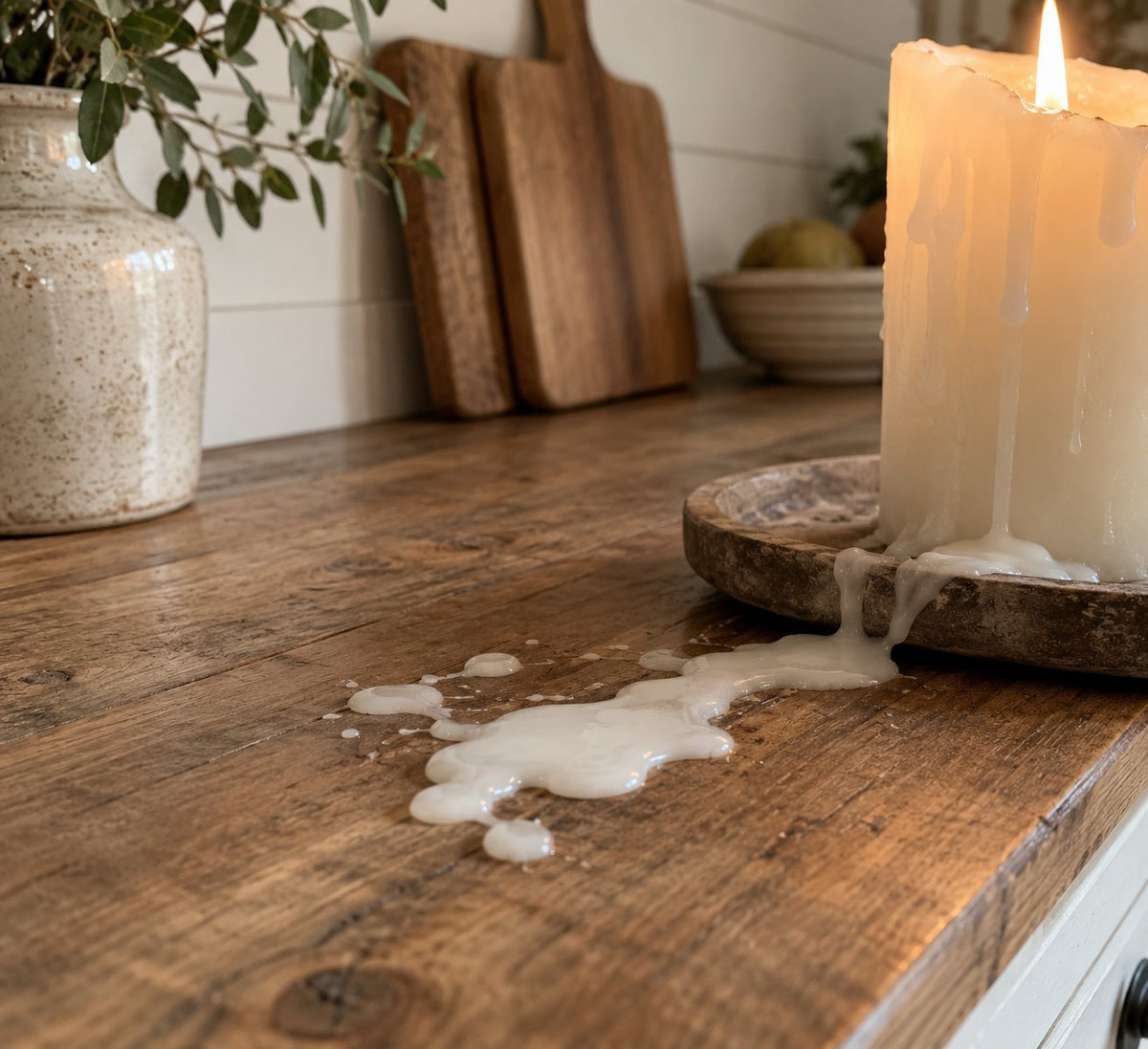
A tipped candle can feel like a small disaster, especially on a table you love. The good news is that how to clean candle wax comes down to one rule: match the method to the surface, not the panic, whether you need to clean candle wax from a table or a treasured textile.
Wax is forgiving if you stay calm. It hardens as it cools, which means most spills can be lifted instead of scrubbed. Scrubbing is what turns a simple spill into a stain.
Below, we walk through the full sequence, surface by surface, plus the habits that keep spills rare in the first place.
Step 1: Let It Harden, Then Scrape
Fresh wax feels soft and tempting to wipe. Don't. Wiping pushes warm wax into fabric and wood grain, where it sets and stains. Let the puddle cool completely first. A bowl of ice set beside the spill speeds this up, and a few minutes in the freezer works for removable pieces like candle holders.
Once the wax is hard and dull, lift the edges with a table knife, a plastic scraper, or an old credit card. Keep the blade almost flat to the surface. Work from the outside of the puddle inward, and let the pieces pop off rather than pry.
Step 2: Choose Cold, Heat, or Solvent
Three methods handle almost every wax spill, and the surface decides which one you use.
|
Method |
Best For |
Avoid On |
|---|---|---|
|
Cold (ice, freezer) |
Carpet, upholstery, glass, hard wax chunks |
Porous stone, antique finishes |
|
Heat (warm iron, low oven, hot water) |
Fabric, glass, metal holders |
Carpet, dyed textiles, wood |
|
Solvent (isopropyl alcohol) |
Glass, tile, sealed counters, residue |
Unsealed wood, stone, silk |
Cold lifts. Heat softens and transfers wax into an absorbent layer. Solvent dissolves the thin film that scraping leaves behind. Most cleanups use two of the three, in that order.
How to Remove Candle Wax from Carpet
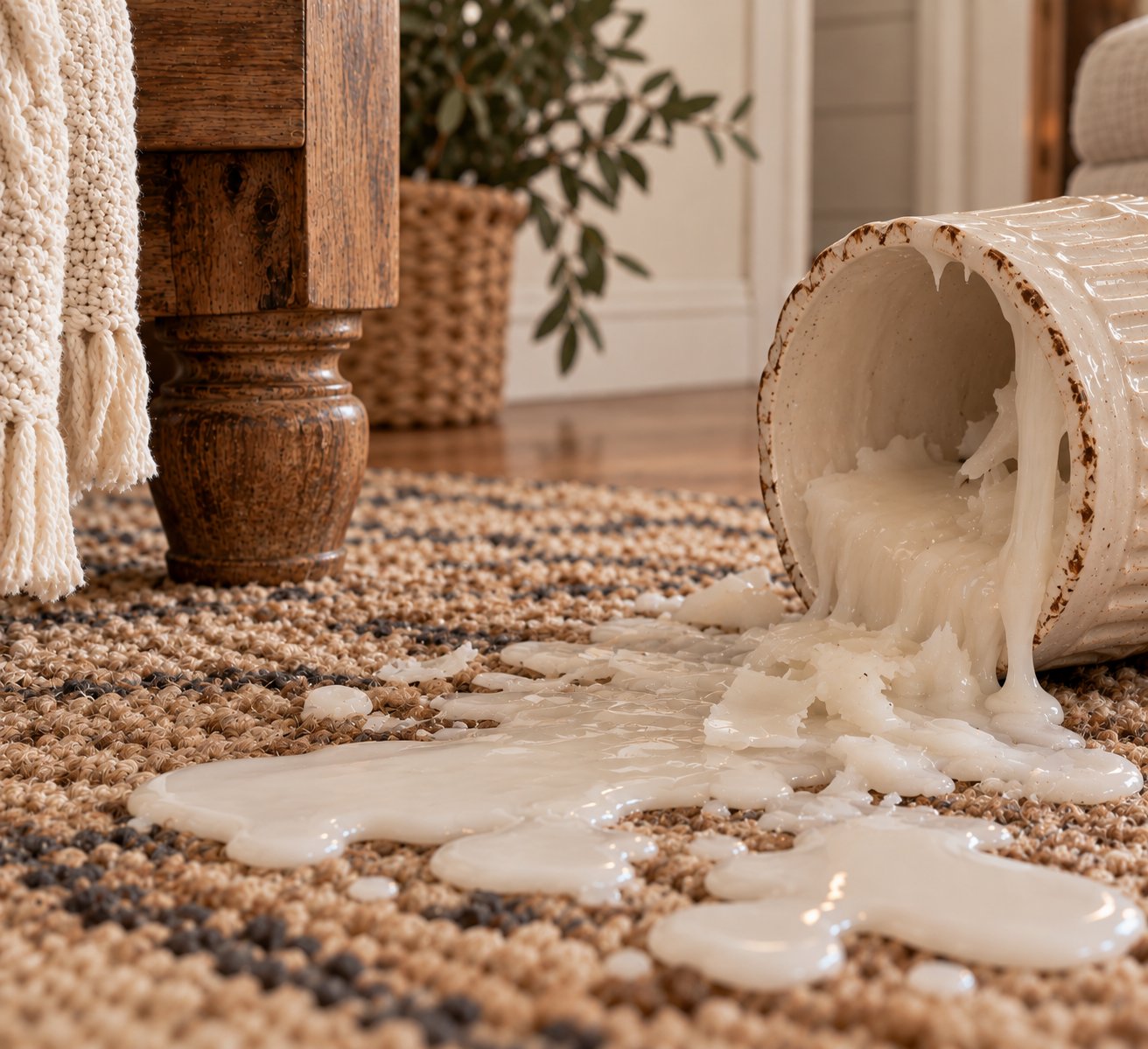
Start with cold, and skip heat entirely. Carpet fibers trap warm wax deep in the pile, and an iron will set it there for good. Fill a zip-top bag with ice, or use a bag of frozen vegetables, and rest it on the spill until the wax turns hard and brittle.
Once hard, break the wax with the back of a spoon. Vacuum the loose pieces with a hose attachment.
M A N C A N S
Finish with a dab of isopropyl alcohol on a cloth to lift the residue, then blot dry. Test any product on a hidden patch of carpet first.
How to Get Candle Wax Out of Fabric and Upholstery
Scrape first, then iron. Let the wax harden fully, then lift off what you can with a table knife. Lay the fabric flat, or slip a paper bag or clean cloth underneath if you cannot remove the cover.
Set a plain paper towel or brown paper bag over the wax. Press a warm iron, on low and with no steam, over the paper for a few seconds. The wax melts and wicks into the paper. Keep moving to a clean spot on the paper and repeat until no more transfers.
For washable fabrics, follow the care label after the wax is gone. For upholstery, blot with isopropyl alcohol on a white cloth and let it air dry. Never scrub velvet or linen. Blotting protects the weave.
How to Remove Candle Wax from Glass
Glass is the most forgiving surface on this list, which is why it is also the one people rush. Take your time here and you will rarely need anything stronger than dish soap.
Start by letting the wax cool completely. Place the glass in the freezer for about fifteen minutes. Wax shrinks as it chills and often pops free in one piece.
What most guides leave out is the film. Even after the wax lifts, a thin oily layer stays behind, and that layer is what holds dust and dulls the glass.
Wax type changes the cleanup more than people expect. Soy wax tends to release cleanly from glass because it is softer and shrinks more in the cold.
Labels deserve their own mention. Many candle jars carry a paper or foil label that turns gummy the moment it meets warm water.
A word on heat. Boiling water is the fastest way to crack cold glass, and thermal shock does not announce itself.
Once the glass is clean and dry, it makes a lovely holder for cotton swabs, wooden matches, or a small bunch of dried lavender on a kitchen windowsill. That second life is one of the quiet pleasures of burning candles at home.
How to Clean Wax Off Candle Holders and Containers
Give a holder a second life. For metal, ceramic, and glass holders, freeze them first, then chip the wax away with a plastic tool. For stubborn film, soak the holder in hot water for a few minutes and wipe with a sponge.
To repurpose a candle jar, freeze it, pop out the wax, then wash with warm water and dish soap. A little isopropyl alcohol clears the last of the residue. Save the leftover wax for a warmer if you like.
Wood, Stone, and Porous Surfaces: What Not to Do
Wood and stone absorb what touches them, so the rules change. Never pour hot water on wood, and never iron it. Heat drives wax into the grain and lifts the finish.
Instead, harden the wax with an ice cube in a bag, then lift it with a plastic scraper held almost flat. For stone counters, a cloth dampened with isopropyl alcohol lifts light residue. On unsealed stone, skip the alcohol and blot with a dry cloth.
For wood, a thin film of wax can often be buffed away with a soft cloth. If the finish looks dull or cloudy, stop and consult a furniture professional. Porous surfaces reward patience and punish force.
Prevention: Simple Habits That Save Your Surfaces
Most wax spills are not accidents so much as small oversights. A wick that grew too long, a candle set too close to the edge of a table, a jar moved while the wax was still liquid. The good news is that a handful of habits, plus a small cleanup kit kept within reach, prevents nearly every spill before it happens.
Why Each Habit Works
Trimming the wick to about a quarter inch before every burn is the single most effective habit.
Burning on a stable, heat-safe tray or holder does two things at once. It catches any wax that escapes the jar, and it protects the surface underneath from heat.
Keeping candles away from drafts, pets, and table edges is about airflow as much as clumsiness. A draft pushes the flame to one side, which melts the wax unevenly and can send a warm stream over the rim.
Never move a lit candle, and let wax cool completely before relocating it. Warm wax shifts with the slightest tilt, and a jar carried across a room is the most common cause of a spill on carpet or upholstery.
Setting candles on a coaster or trivet on wood and stone protects the finish from heat as much as from wax. A warm jar can leave a faint ring on a sealed wood table, and that ring is harder to remove than the wax itself.
Build a Small Cleanup Kit
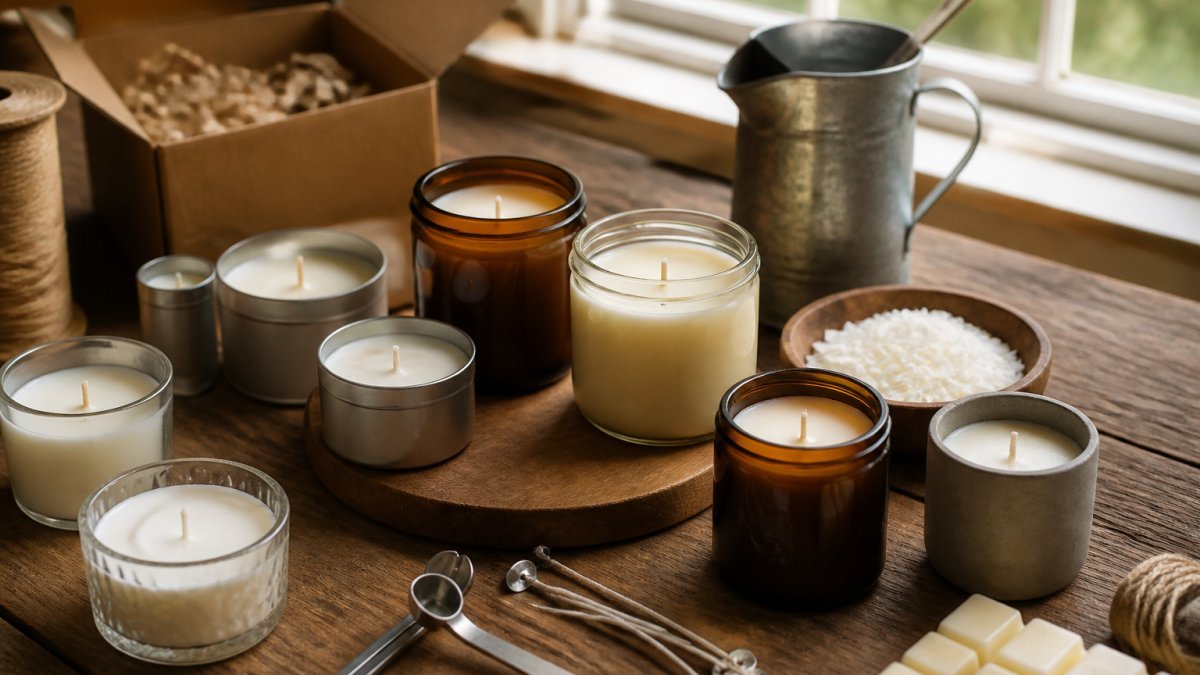
A few inexpensive tools kept together in a drawer or basket make cleanup quick when a spill does happen. None of these are specialty items, and most homes already have them.
- A plastic scraper or an old credit card for lifting hardened wax
- A zip-top bag and a handful of ice cubes for cold treatment
- A clean white cloth and a roll of plain paper towels for blotting
- A small bottle of isopropyl alcohol for residue on glass, tile, and sealed counters
- A plastic spoon for breaking up wax on carpet
- A pair of cotton gloves for handling frozen glass
Keeping these together means you are not hunting for a scraper while wax sets into a cushion. The kit also doubles as a gift idea for a friend who loves candles but dreads the cleanup.
A Note on Soy Wax
Soy wax has a lower melting point than paraffin, which makes it gentler on surfaces and easier to lift once it cools. It also tends to pool more evenly when the wick is trimmed, so the habits above go a long way. Our hand-poured soy candles are made for slow evenings at home, and a little care keeps them burning beautifully to the last inch. If you are new to soy, our candle care guide is a good place to start, and our seasonal collections are a lovely way to bring a little warmth to every room.
Conclusion
A wax spill is a small interruption, not a ruined table. Let it harden, scrape gently, and choose cold, heat, or solvent based on the surface in front of you. Patience does most of the work.
If you would rather spend your evenings enjoying candlelight than cleaning it up, explore the Corn Crib Candles collection. Our small-batch soy candles are hand-poured with cotton wicks, made to bring warmth to everyday moments. Find your next favorite scent and settle in.
Frequently Asked Questions
Can you remove candle wax with ice?
Yes. Ice is one of the safest first steps for carpet, fabric, and hard surfaces. Fill a plastic bag with ice cubes, set it over the wax, and wait until the wax turns hard and brittle. Then lift or scrape it away with a table knife or plastic scraper. Cold makes wax contract, so it releases its grip on fibers and glass. Skip ice on wood and other porous surfaces, where trapped moisture can cause damage.
How do I remove candle wax from my couch without heat?
Start with cold. Place a bag of ice on the spill until the wax hardens completely, then lift the pieces with a table knife. For residue left in the upholstery, blot with a cloth dampened in isopropyl alcohol, testing a hidden spot first. Avoid rubbing, which pushes wax deeper into the fabric. If the cushion cover unzips, remove it and follow the care label. Heat can set stains in some fabrics, so cold and patience are safer.
Do you throw away melted candle wax?
You can, but there are better options. Leftover wax from a candle that has burned down can be repurposed into wax melts, fire starters, or a new candle if you have the right supplies. Let it cool completely before handling, then chip it out of the container. Small amounts of wax residue can go in the trash once hardened. Never pour melted wax down a drain, where it will cool and clog the pipe.
How do you clean candle wax off glass without scratching it?
Let the wax harden, then press a warm cloth against the glass to loosen the edges and lift the slab away. Never use a razor blade on curved glass or use boiling water, which can crack the jar. Isopropyl alcohol removes the final waxy film.
A wax spill does not have to end in a stain. With the right sequence, most surfaces clean up in minutes. Corn Crib Candles hand-pours soy candles in small batches with cotton wicks, so your candles burn evenly and your home stays warm. Explore our seasonal fragrances and best sellers to find the scent that fits your space.

Leave a comment
This site is protected by hCaptcha and the hCaptcha Privacy Policy and Terms of Service apply.