Last Updated: November 3, 2026
Quick Summary
Choose a carpet freshener for pets by matching the product to the odor first, the format to your carpet second, and the ingredients to the animal in your home last. Read the full ingredient list, follow the label's dwell time exactly, and keep pets off the carpet until it is dry and residue-free.
- Scent should be the last decision, since fragrance over a set-in pet odor usually makes the room smell worse.
- A light, even dusting of powder is enough; over-applying leaves grit and can clog vacuum filters.
- Vacuum slowly in two passes, one in each direction, to pull more powder out of the fibers.
- Sprays suit spot areas and stairs, but liquid on a soaked stain can push moisture deeper into the pad.
- Clean the source with an enzyme cleaner before freshening, or the smell can return on humid days.
Table of Contents
- Start With the Odor, Not the Scent
- Pet Safe Carpet Deodorizer Powder: What to Check Before You Sprinkle
- Carpet Deodorizer Spray: When a Liquid Format Fits Better
- The Best Carpet Deodorizer for Pet Urine Is Matched to the Stain
- Pet Odor Removal From Carpet: A Step-by-Step Routine
- Ingredients, Species, and Exposure: A Safety Checklist
- When a Freshener Is Not Enough
- Pick Your Freshener and Refresh Your Home
- Frequently Asked Questions
Start With the Odor, Not the Scent
Most shoppers pick a carpet freshener for pets by sniffing the lid. That is the wrong starting point.
The difference matters: a carpet freshener adds scent and light deodorizing to carpet fibers, while a carpet deodorizer targets the source of the smell itself.
At Corn Crib Candles, we talk with pet owners every week who bought something that smelled lovely in the jar and did nothing for the actual problem. Before you sprinkle anything, answer three questions:
- What is the odor? Fresh accident, set-in urine, damp-dog smell, or general staleness?
- Where is it? Surface fibers, the pad underneath, or the whole room?
- Who is walking on it? A dog, a cat, a senior pet, or a puppy that chews?
Your answers point to a format, an ingredient list, and an application method. The scent comes last.
Pet Safe Carpet Deodorizer Powder: What to Check Before You Sprinkle
A pet safe carpet deodorizer powder is a dry product you scatter across the carpet, let sit, and vacuum up.
Many powders rely on a fine, porous carrier that traps odor on its surface and gets pulled out with the vacuum.
Read the label before you buy, and read it again before you use it. Here is our short list:
- Application and dwell time. Follow the label's timing exactly. Leaving powder down longer does not make it work harder.
- Residue and vacuum guidance. Fine powder can tax a vacuum. Check your vacuum's care instructions and the carpet maker's guidance first.
- Fragrance strength. A strong scent in the jar can be overpowering once spread across a whole room.
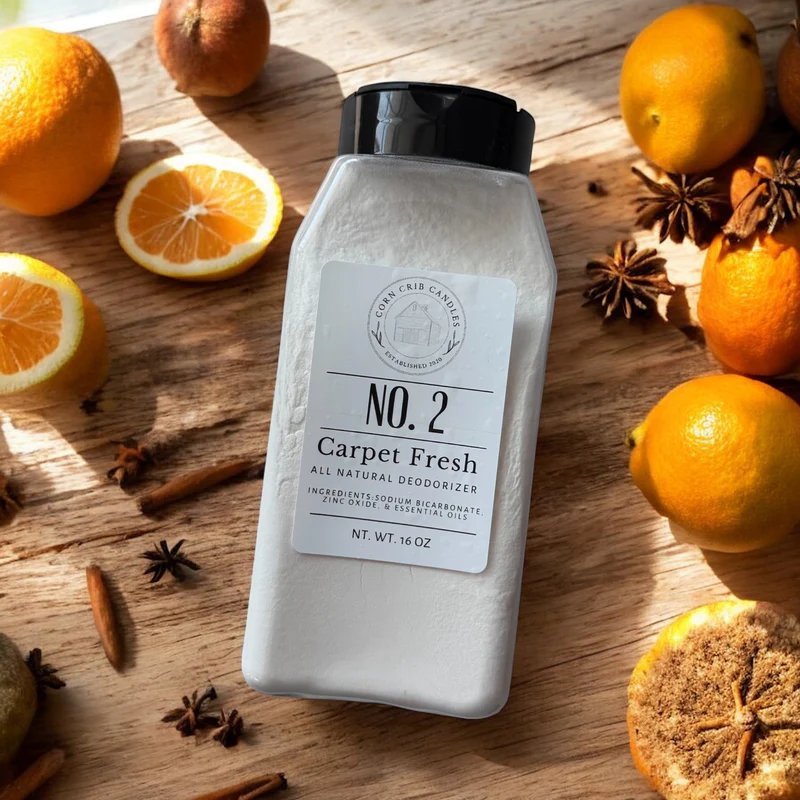
Our own Carpet Fresh is a sprinkle-and-vacuum freshener in three essential-oil blends, from a lemon-and-eucalyptus option to a fruit-forward citrus mix. Choose the blend that suits your home.

How Much Powder to Use, and How to Get It Out
The most common mistake is using too much. A light, even dusting is enough for most rooms. You want contact with the fibers without driving powder into the pad.
A workable routine:
- Vacuum first. A clean carpet holds less embedded soil, and the powder has a better chance of reaching odor in the fibers.
- Dust lightly. Sprinkle a thin, even layer, working in sections rather than dumping in one spot.
- Wait the labeled time. Set a timer. More time is not better once the label limit is reached.
- Vacuum slowly and in two passes. One pass in each direction, with the beater bar engaged if your carpet maker allows it. Slow passes pull more powder out than fast ones.
- Check for residue. Run a clean white cloth or your hand across the carpet. If you feel grit or see powder, vacuum again before pets return.
Watch out: powder that is over-applied or left too long can leave a gritty feel and clog vacuum filters. Use less than you think you need, and empty the canister or change the bag after a whole-house application.
Powder and Pets: Exposure Routes to Think Through
Powder becomes airborne when you sprinkle it and again when you vacuum, and it settles on paws, toys, and food bowls. That matters differently for different animals.
- Dogs walk through it and may lick their paws. Most healthy dogs tolerate a light application once the carpet is vacuumed, but a dog that chews or digs at the carpet can ingest more than intended.
- Cats groom their paws and coats often, so anything that settles on them can end up swallowed. Some pets are sensitive to essential oils, so a scented powder deserves a closer look around them.
- Birds and small caged pets live close to the floor and have sensitive respiratory systems. Airborne powder and strong fragrance are a bigger concern for them, and a scent-free option or skipping the powder in that room is often kinder.
Keep pets out of the room while you apply and vacuum, and bring them back only after the carpet is dry and residue-free. That single habit prevents most powder problems.
Carpet Deodorizer Spray: When a Liquid Format Fits Better
A carpet deodorizer spray is a liquid you mist lightly over carpet and let dry.
Sprays are not the right tool for a soaked stain. Liquid on a wet spot can push moisture deeper into the pad.
Use sprays with restraint:
- Mist lightly and evenly, never soak.
- Test on a hidden patch of carpet first.
- Keep pets off the area until it is fully dry.
The trade-off is simple. Sprays are fast and targeted. Powders cover more ground and reach deeper into fibers. Choose by the job, not by habit.
The Best Carpet Deodorizer for Pet Urine Is Matched to the Stain
There is no single best carpet deodorizer for pet urine. The right product depends on whether the spot is fresh or set in, and how deep the moisture went.
New and old spots behave differently and need different treatment.
Match the product to the situation:
Stain Type |
What to Reach For |
Why |
|---|---|---|
Fresh accident |
Blot, then an enzyme cleaner |
Breaks down the source before it sets |
Set-in odor |
Repeated enzyme treatment, then a freshener |
Scent alone will not fix old contamination |
Damp-dog smell |
Wash bedding, air the room, then a light powder |
The smell usually lives in fabrics, not the floor |
General staleness |
A carpet freshener or deodorizing powder |
Surface refresh is the goal |
Watch out: a fragranced powder over an untreated urine spot can lock in a smell that returns on humid days. Clean the source first.
Pet Odor Removal From Carpet: A Step-by-Step Routine
Pet odor removal from carpet works best as a routine, not a rescue. Follow these steps in order, and repeat as needed.
- Find the spots. Use your nose and a flashlight. Urine often shows under UV light.
- Blot fresh accidents. Press with a clean cloth. Do not rub.
- Treat the source. Apply an enzyme cleaner made for pet accidents and follow its directions.
- Let it dry fully. Airflow helps. Keep pets away until dry.
- Freshen the surface. Sprinkle a carpet powder, wait the labeled time, and vacuum.
- Wash the soft goods. Pet beds, throws, and slipcovers often hold the smell.
- Repeat for set-in odors. Old spots may need more than one round.
For a deeper walkthrough of the full routine, see our guide on how to freshen carpet safely at home.
Ingredients, Species, and Exposure: A Safety Checklist
Ingredients matter more with pets in the house, and the risk is not the same for every animal. Dogs walk on the carpet, cats groom their paws, birds and small pets breathe what settles there, and a puppy will put almost anything in its mouth.
This is general guidance, not veterinary advice. If your pet has a health condition, is very young or very old, or has reacted to a product before, ask your veterinarian before you use anything new.
Reading the Ingredient List
Start with transparency. A label that lists only "fragrance" tells you almost nothing, because fragrance is a catch-all that can contain dozens of compounds. A label that names its carrier, fragrance components, and any essential oils gives you something to evaluate.
Work through these questions:
- Is there a full ingredient list, or only a fragrance line? A full list is the baseline for any product you plan to use around pets.
- Are essential oils named, and at what strength? Some essential oils can be a concern for cats in particular.
- Is the carrier a simple mineral or something more complex? Baking soda and similar mineral carriers are common and generally well understood. More complex carriers deserve a closer read.
Species-by-Species Exposure
The same powder or spray reaches different animals by different routes.
- Dogs pick up product on paws and may lick them. The bigger risk is a dog that chews or digs at treated carpet, or one with allergies or skin sensitivities.
- Cats are the group most worth a second look. They groom frequently, so paw contact becomes ingestion, and their livers process certain compounds differently than dogs. Citrus and tea tree oils are the usual examples people ask about.
- Birds have sensitive respiratory systems and react to airborne fragrance and powder more readily than dogs or cats. In a room with a bird, unscented and low-dust is the safer direction.
A Practical Pre-Purchase Checklist
- Is there a full ingredient list on the label?
- Are essential oils listed, and at what strength?
- Does the label name which animals it is suited for?
Watch out: "natural" and "pet safe" are marketing terms. Read the actual ingredients rather than trusting the front of the package.
When a Freshener Is Not Enough
Sometimes the smell keeps coming back no matter how often you freshen. That is a sign the source is deeper than the surface.
Watch for these signals:
- The smell returns within a day or two.
- It gets stronger on humid days.
- You can smell it near the baseboards or in one specific corner.
In those cases, a freshener is the wrong tool. For lingering pet scent between baths, our Furr-Everything Pet Cologne Spray is designed for use between shampoos and grooming appointments, and it can also be used to refresh bedding and crates.

Pick Your Freshener and Refresh Your Home
Choosing a carpet freshener for pets comes down to matching the product to the odor, the format to the carpet, and the ingredients to the animal in your home. Get those three right and the scent is just the finishing touch.
A clean, fresh-smelling home does not need to be complicated. It needs the right product used the right way, with a little patience for the spots that need real treatment.
Frequently Asked Questions
Is carpet freshener pet friendly?
It can be, but the label decides. A carpet freshener for pets should list its ingredients, state which animals it suits, and give clear application and vacuuming directions. Some pets are sensitive to fragrance or essential oils, and a scent-free option may be the better fit for a household with a cat, a puppy, or a pet with skin or breathing issues. Read the label, do a small patch test, and ask your veterinarian if you are unsure.
Should I choose a carpet deodorizer powder or spray for pet odors?
Match the format to the job. A pet safe carpet deodorizer powder works well for broad areas such as a whole rug or a room that needs freshening, and it vacuums away afterward. A carpet deodorizer spray reaches upholstery, mattresses, dog beds, and tight corners where powder is awkward. Many homes keep both on hand: powder for the floor, spray for soft furnishings.
When should I use an enzymatic cleaner instead of carpet freshener?
Use an enzymatic cleaner on fresh or set-in urine and feces spots, because the odor comes from contamination in the carpet fibers and backing. A freshener adds scent and absorbs some odor but is not a substitute for cleaning the source. Once the spot is cleaned and dry, a freshener can help the room smell fresh again.
How do I use carpet freshener safely around pets?
Follow the label. Keep pets out of the room while you apply the product, let it sit for the listed dwell time, and vacuum thoroughly so no residue is left for pets to lick or inhale. Check that your vacuum is compatible with powder, and store the container where pets cannot reach it. If your pet has a health condition or skin sensitivity, ask your veterinarian before the first use.
If pet odors have been winning in your house, we would love to help you turn that around. Corn Crib Candles is a family-owned shop rooted in rural Illinois, and we make small-batch home fragrances with the same care we put into our hand-poured soy candles. Our Carpet Fresh comes in three essential-oil blends, and our room and linen sprays are an easy way to refresh the rest of your home. Get started with Corn Crib Candles and make every room feel welcoming again.


Leave a comment
This site is protected by hCaptcha and the hCaptcha Privacy Policy and Terms of Service apply.